- Venue
University of Westminster
-
Date
Tuesday 13 January 2026
-
Time
11am – 5pm
-
RSVP
Expression of Interest
The impact of rapid ecological change continues to bring about unprecedented environmental disasters and a threat to persons, communities and beyond human life. It is most often discussed as a universal crisis, spanning all continents and waters. And yet we know its impact is deeply uneven, where many communities affected are those shaped by histories of colonial extraction, forced migration, and environmental exploitation. The study day Where the Waters Meet aims to explore the entangled histories of climate change and colonialism.
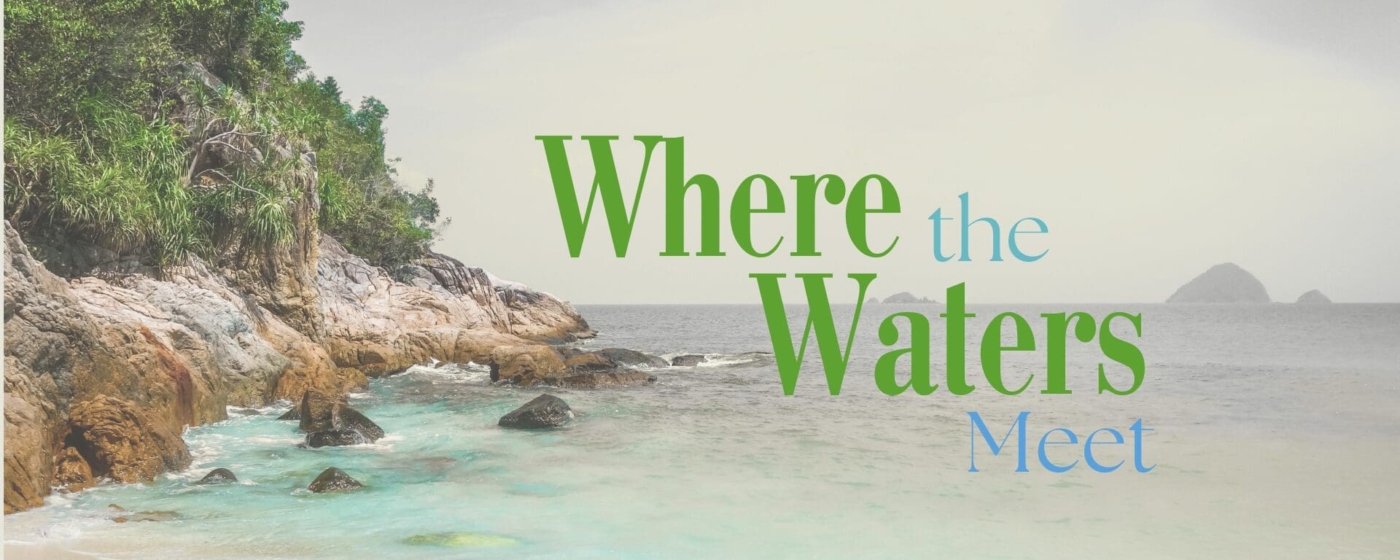
Inspired by Selene Wendt’s curatorial essay ‘The Wisdom of Water-Bearded Rocks’ featured in the publication The Sea is History (2019), we focus on “islands” as both a physical site and a metaphorical entry point to thinking about slow violence as inherent to the relationship between ecological crisis and colonial histories. Islands represent the crime scenes of colonial power and climate crisis whether as colonial plantation spaces, strategic sites of resistance, protest and marronage, places of incarceration, or construed as idyllic pleasure landscapes for tourists.
The study day combines screenings of short films including — a river holds a perfect memory (2024) by Hope Strickland, Île de France (2015) by Shiraz Bayjoo, and La Gomera by Joy Gregory (2002) — each exploring islands, their histories of colonialism, and transformations of the landscapes.The afternoon session will be facilitated through workshops that delve deeper into these themes, led by practitioners whose work and research engages with the links between climate change and colonialism.
This is a joint event co-presented by iniva (Institute of International Visual Arts) and CREAM (Centre for Research and Education in Arts and Media), University of Westminster, as part of the Visualising Contemporary Art Histories project, supported by the BFI Screen Heritage Fund, awarding funds from the National Lottery.
About the Project
The Visualising Contemporary Art Histories: iniva’s Moving Image Archive shines a light on underrepresented voices and stories from the Global Majority, with a particular focus on the Global South, by celebrating and preserving iniva’s rich moving image archive.
The unique collection of mixed media materials, document iniva’s rich programming history and addressing themes such as Black diaspora perspectives, migration, cultural memory, race relations in Britain, desire, and personal migrant experiences. The collection allows engagement with films that provide critical reflections on the Black British experience, post-colonial identity and community resilience; documentaries on socio-political issues; as well as poetic and artistic films that explore displacement and environmental climate change.
By cataloguing and sharing these moving image works iniva’s project ensures that these critical cultural narratives are preserved, accessible, and celebrated. It highlights the ongoing relevance of these themes, fostering dialogue with contemporary filmmakers and increasing knowledge for future audiences.
About iniva
iniva (Institute of International Visual Arts) is an evolving, radical visual arts organisation dedicated to developing an artistic programme that reflects on the social and political impact of globalisation. With the Stuart Hall Library acting as a critical and creative hub for our work, we collaborate with artists, curators, researchers and cultural producers to challenge conventional notions of diversity and difference. We engage a wide audience, particularly young people, in discourse and debate on issues surrounding the politics of race, class and gender.
Through our programme we work predominantly with British-born and British-based visual artists of African and Asian descent supporting them at different stages in their careers. We offer residencies, commission new work and promote existing practices enabling artistic ambition and development. By cultivating innovative thinking, we are committed to disseminating research across a wide cultural spectrum and geographical network. Our ambition is to build a greater body of knowledge around each of the artists with whom we work to ensure the legacy of their practices for future generations of researchers and audiences.
About CREAM, University of Westminster
The Centre for Research and Education in Arts and Media (CREAM), University of Westminster, is a world-leading centre and pioneer in practice-based, critical, theoretical and historical research in art, creative and interdisciplinary practice. CREAM researchers are leading artists, filmmakers, photographers, curators, theorists, critics, historians, designers and musicians, encompassing Film and Media; Art and Society; Photography; Fashion and Music research areas. CREAM researchers work to develop interdisciplinary projects, platforms and networks with external and international partners. We think about what future is wanted, given the mess that is already in front of us.
In 2022, CREAM established the platform Ecological Futurisms (EF) as an emerging collective of CREAM faculty and doctoral researchers. Researchers recognise the pressing damage brought on by global climate change, who it affects, to what extent and how it is inextricably linked to historical lines of inequality. Working in research networks across the Caribbean, North America, Europe and Southeast Asia, EF provides a platform to develop updated modes of collaboration, to establish new forms of performative, time-based and on-line practices. Examples of CREAM EF events include working with Soil Assembly (2023), Matters of Extraction (2022) and the Court for Intergenerational Climate Crimes (CICC) project by Radha D’Souza and Jonas Staal (2025).